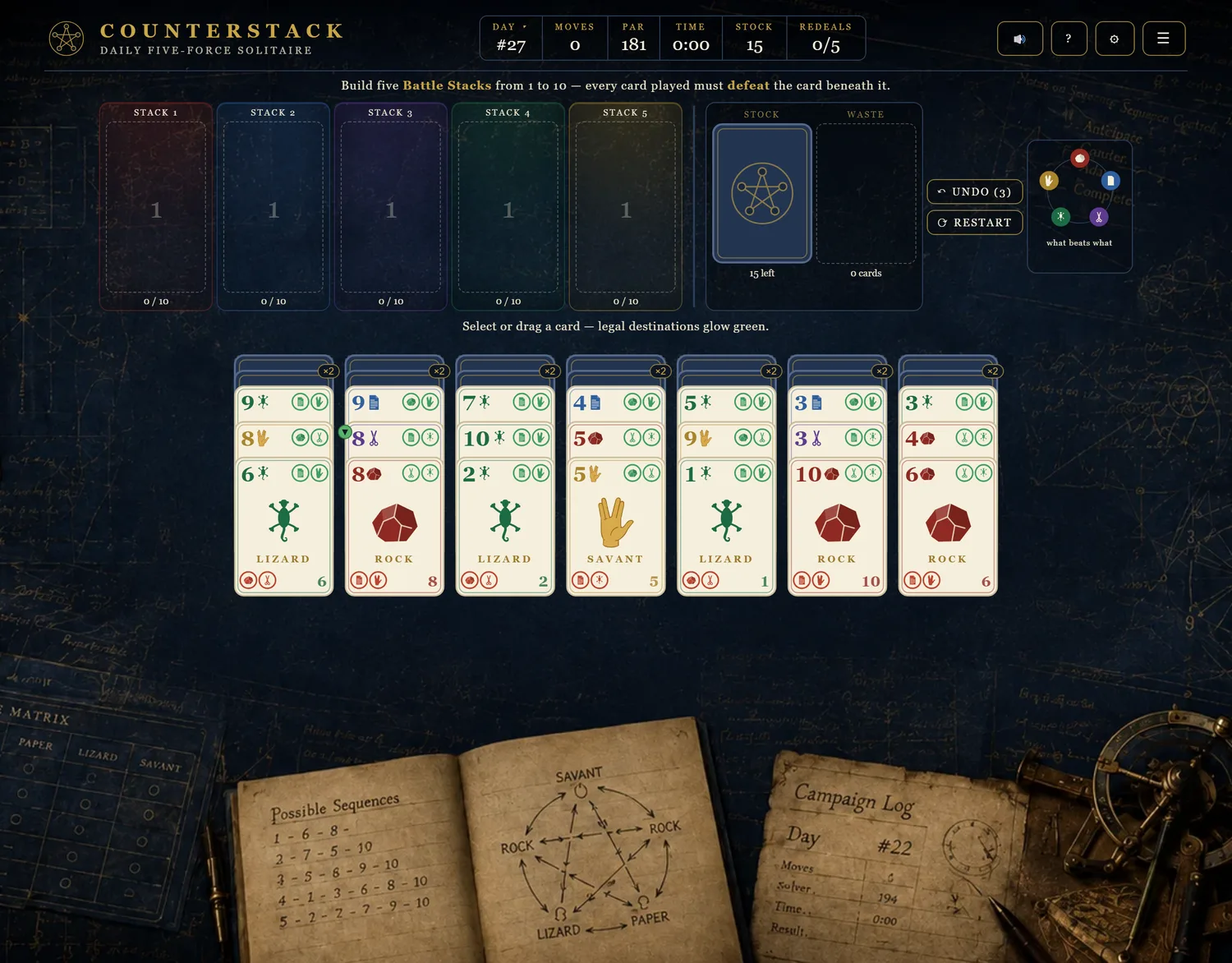
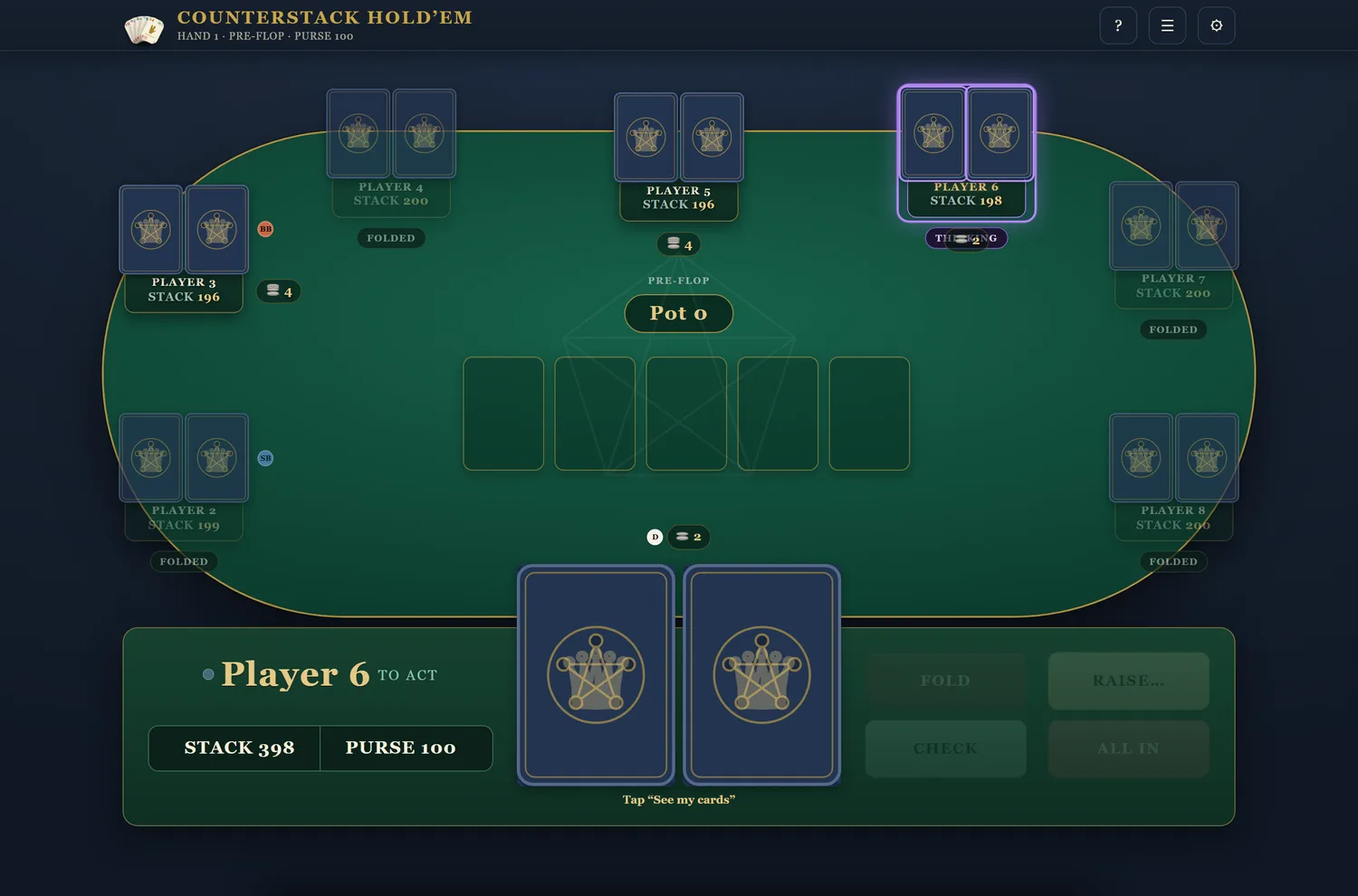
Every image is the running game, captured from the build linked
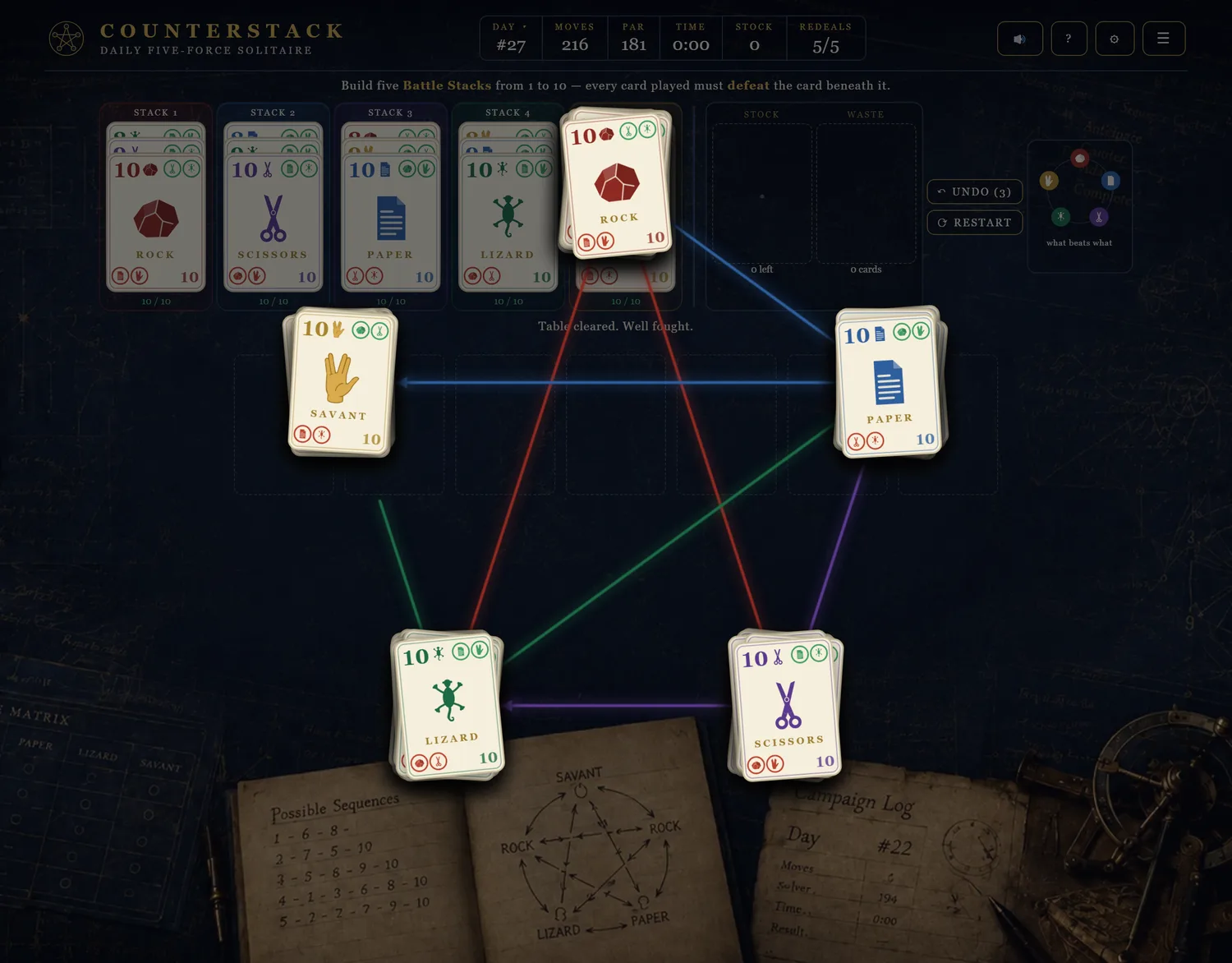
above. The solved board is finished through the game’s own solver, so the
winning position shown is the line it proved for that deal.
One law, five forcesRock, Paper, Scissors, Lizard and Savant, each beating two and
falling to two, across ranks 1 to 10. A card may only be played onto a
card it beats — which means there are no dead cards: a rank 1 takes
a rank 10 if the pentagram says so.Both halves of the entryThe daily solved by the solver’s own line, then the same five
forces played for chips at a full Hold’em table — reached from
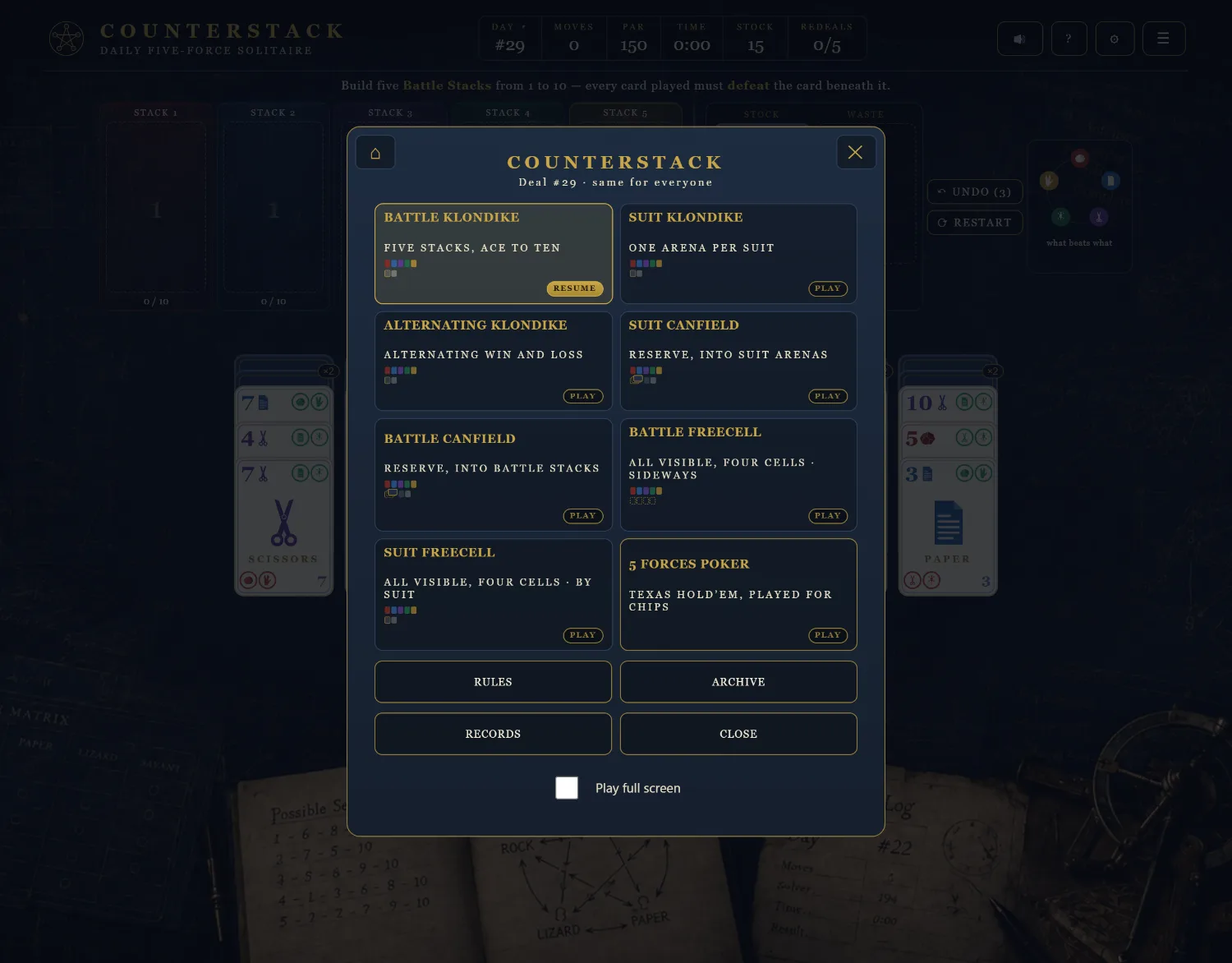
the same menu, which is what makes this one game rather than two.Eight ways to play, one ruleBattle Klondike is the daily. Suit and Alternating Klondike change
what the foundations want; the two Canfields add a face-down reserve; the
two FreeCells turn every card face-up with four free cells, so there is
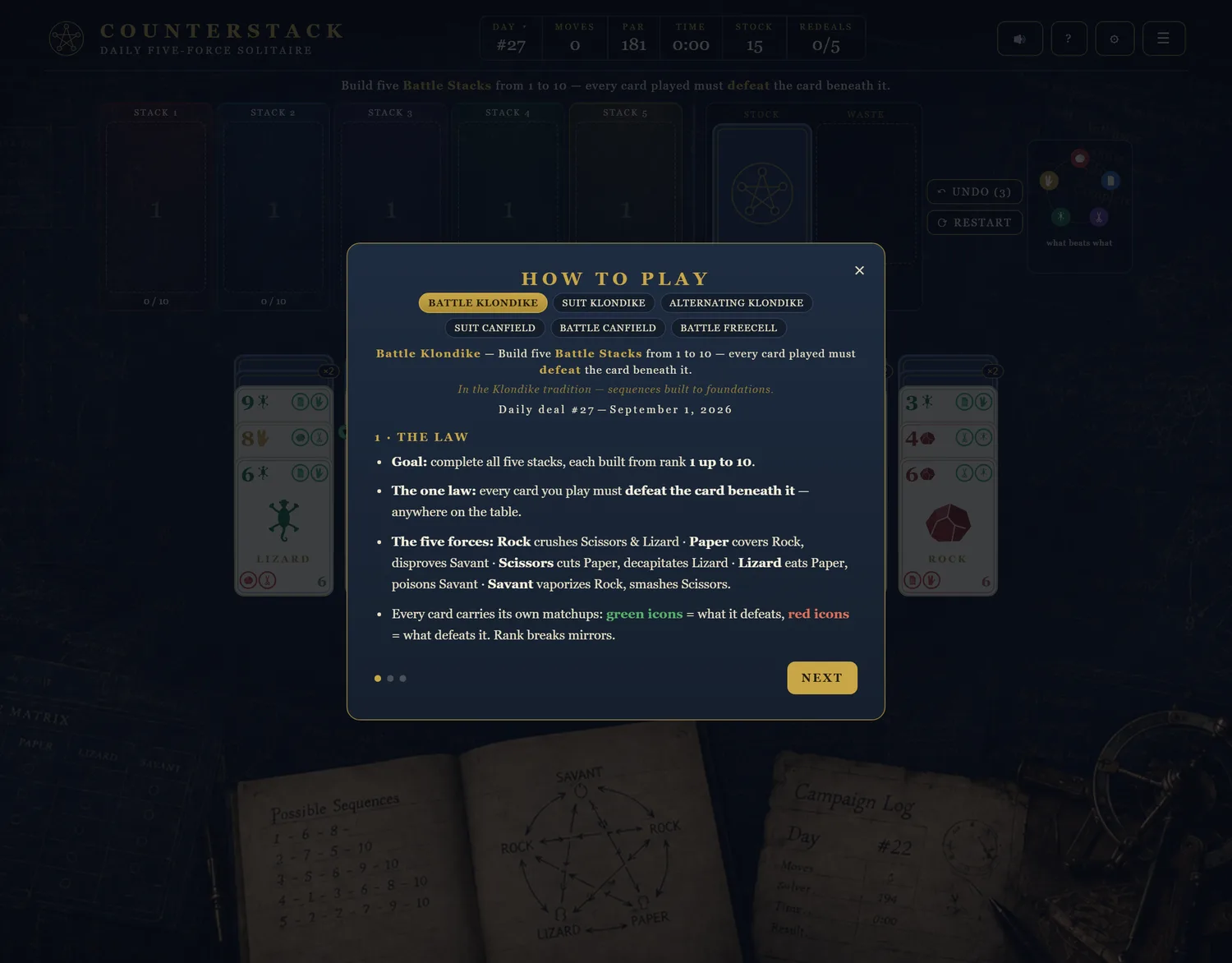
no luck left to blame. Hold’em sits in the same menu.The pentagram, on the table and on every cardEach card carries what it beats and what beats it on its own face,
so the relationships are never hidden in a rulebook.Solved — and proved solvable firstEvery daily deal carries a machine proof of winnability before it is
published, and the table refuses placements that would provably strand a
rank. Being stuck is never the deal’s fault.Counterstack Hold’emThe same deck and the same five forces, played for chips at a full
table. A hand is won by the pentagram rather than by a poker ranking, so
position and the force cycle both matter.